
Malaysia's public sector lease accounting is currently in an unusual position.
Under the present Malaysian Public Sector Accounting Standards, lease accounting continues to be governed by MPSAS 13, Leases.
MPSAS 13 retains the traditional distinction between finance leases and operating leases. For lessees, an operating lease is generally recognised through lease expense over the lease term rather than through a right-of-use asset and corresponding lease liability.
Internationally, however, public sector lease accounting has already moved on.
IPSAS 43, Leases superseded IPSAS 13 and became effective internationally from 1 January 2025. For lessees, IPSAS 43 introduces a right-of-use model broadly aligned with IFRS 16.
Malaysia has not yet issued MPSAS 43.
As at the current published MPSAS listing by the Accountant General's Department of Malaysia, MPSAS 13 remains the applicable Malaysian lease standard. The same listing includes the more recently issued MPSAS 41 and MPSAS 42, but does not yet include an MPSAS 43.
There is, however, an indication of the direction of travel. In its status update on accrual accounting implementation, JANM previously listed IPSAS 43 – Leases among the standards that were “Dalam Proses Pemakaian”, subject to the IPSAS Handbook arrangement between the Federal Government of Malaysia and IFAC.
That should not be read as an announced Malaysian effective date.
But it does raise a practical question:
If Malaysian public sector lease accounting eventually moves towards the IPSAS 43 model, are agencies ready to deal with lease accounting becoming significantly more data-intensive again?
Why this matters operationally
The difference between the two models is not merely a change in journal entries.
Under MPSAS 13, an operating lease can be relatively straightforward from the lessee's perspective. Lease payments are generally recognised as expense over the lease term.
Under a right-of-use model, each relevant lease may require continuing calculations involving:
- lease payments;
- lease term;
- discount rates;
- lease liabilities;
- right-of-use assets;
- depreciation;
- finance costs;
- modifications;
- reassessments; and
- current and non-current liability classification.
For a small number of leases, this may still be manageable.
For a large portfolio, it becomes a different operational problem.
We have seen both sides of this transition
In one of our earlier lease accounting implementations, a public sector entity was reporting under MFRS and maintained a central lease register to support the requirements of MFRS 16.
The register was useful because lease accounting involved recurring calculations across a significant number of contracts.
When the entity subsequently transitioned to MPSAS, the applicable lease accounting moved back to the MPSAS 13 model.
For leases classified as operating leases, the need for the same level of right-of-use asset and lease liability calculation reduced significantly.
The lease register therefore became less critical to the financial reporting process.
That experience raises an interesting implementation issue for the future.
If Malaysian MPSAS eventually adopts a model similar to IPSAS 43, public sector entities may find themselves facing many of the same calculation and data-management requirements again.
Five leases and two hundred leases are different problems
It is important not to overstate the need for a lease system.
An entity with five or ten relatively straightforward leases may be perfectly capable of maintaining an individual amortisation schedule for each contract.
A spreadsheet for Lease 1, another for Lease 2 and another for Lease 3 may still be workable.
The issue changes when an agency has:
50 leases.
100 leases.
Or perhaps 200 lease contracts across different locations and asset classes.
At that scale, the challenge is no longer simply calculating present value correctly once.
Management needs to know:
- which contracts are active;
- which contracts have expired;
- which leases have been extended;
- which payments have changed;
- whether options have been exercised;
- whether modifications have been captured;
- whether the accounting entries agree to the general ledger; and
- whether the closing lease liability can be reconciled to the underlying contracts.
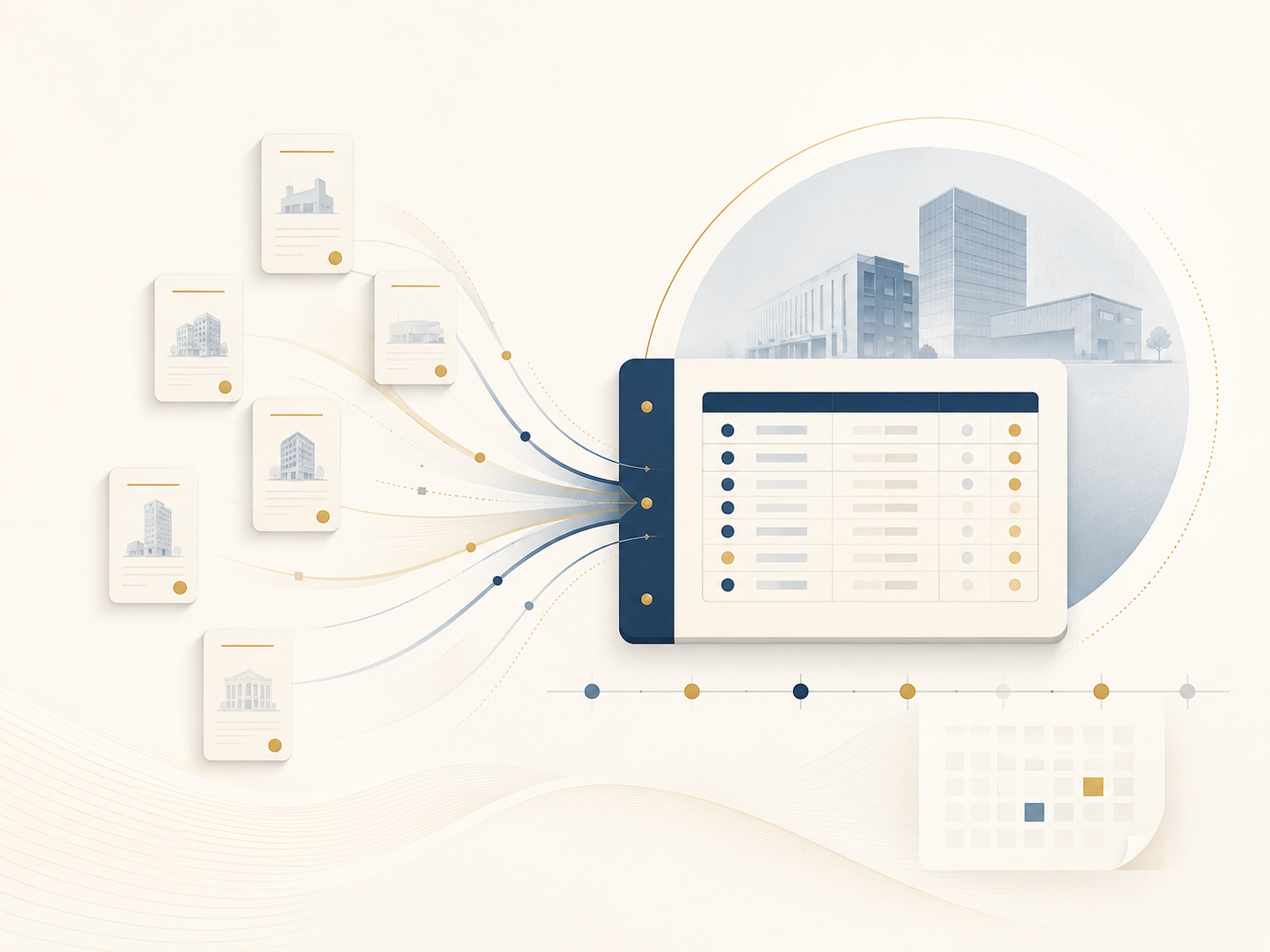
This is where a central lease register becomes useful.
A lease register does not necessarily mean sophisticated software.
At its simplest, it is a structured central record that holds the important contract data and produces consistent lease calculations across the portfolio.
The value becomes greater as the number of contracts increases.
Some public sector groups already have a lease accounting mismatch today
There is another issue that does not need to wait for a new MPSAS lease standard.
A public sector parent may prepare its financial statements under MPSAS, while its commercial subsidiaries prepare financial statements under MFRS.
The subsidiary therefore applies MFRS 16.
The parent, however, currently applies MPSAS 13.
That can result in different accounting for the same type of lease transaction.
For example, a lease accounted for by a subsidiary under MFRS 16 may include:
- a right-of-use asset;
- a lease liability;
- depreciation expense; and
- finance cost.
If that lease would be classified as an operating lease under MPSAS 13, the MPSAS treatment is different.
This becomes relevant when preparing consolidated financial statements.
MPSAS 35 requires consolidated financial statements to use uniform accounting policies for like transactions and events in similar circumstances.
Where a controlled entity applies a different accounting policy, appropriate adjustments are required during consolidation to conform its financial information to the accounting policies of the economic entity.
For an affected lease, this could mean adjusting the subsidiary's MFRS 16 figures to the appropriate MPSAS 13 treatment for group reporting purposes.
The precise adjustment will depend on the terms and classification of the lease. Not every lease will necessarily be an operating lease under MPSAS 13.
But the broader point is important:
A subsidiary's MFRS-compliant financial statements do not automatically mean that its lease balances can be consolidated into an MPSAS group without adjustment.
The data may be more important than the accounting engine — for now
Does this mean public sector agencies should start implementing IPSAS 43 today?
No.
There is currently no published Malaysian MPSAS 43 effective date.
Changing the accounting treatment before a Malaysian standard becomes applicable would therefore be premature.
But there is a difference between implementing a future accounting standard and being ready for one.
Agencies with significant lease portfolios can already improve the quality of their underlying contract data.
Useful information may include:
- contract reference;
- description of the leased asset;
- location;
- lessor;
- commencement date;
- lease expiry date;
- payment frequency;
- contractual lease payments;
- escalation clauses;
- rent-free periods or incentives;
- extension options;
- termination options;
- purchase options;
- residual value guarantees;
- variable payment terms; and
- significant service components included within the contract.
Keeping this information in a structured form has value even under the existing MPSAS 13 model.
If the accounting requirements eventually change, the entity will not need to reconstruct years of lease information from individual agreements, payment vouchers and correspondence.
The real implementation challenge may not be the accounting standard
When a new accounting model is introduced, attention naturally focuses on technical accounting questions.
What is the discount rate?
How is the lease liability calculated?
What is included in the right-of-use asset?
Those questions matter.
But for an organisation with a large lease portfolio, the more difficult question can be:
Where is the data?
If the answer is spread across 200 PDF contracts, multiple departments, payment records and individual Excel files, implementation becomes a data exercise before it becomes an accounting exercise.
That was one of the important lessons from private sector implementation of MFRS 16.
Public sector entities can potentially avoid repeating the same problem.
What agencies can do now
There is no need to calculate a future MPSAS lease liability today.
But agencies with significant lease portfolios may consider:
- identifying the population of active lease contracts;
- maintaining a central contract listing;
- capturing the key commercial terms of each lease;
- distinguishing leases from service arrangements;
- identifying which departments own or manage the underlying contracts;
- maintaining information on renewals, extensions and terminations; and
- ensuring that historical contract information remains accessible.
For public sector groups, there is an additional step:
- identifying subsidiaries applying MFRS 16 and assessing whether lease accounting adjustments are already required for MPSAS consolidation.
This is useful regardless of when a future Malaysian lease standard eventually becomes effective.
When the accounting gets complicated again
MPSAS 13 currently gives many public sector lessees a substantially simpler accounting outcome for operating leases than the right-of-use model used under MFRS 16 and IPSAS 43.
That may not remain the position indefinitely.
IPSAS 43 has already replaced IPSAS 13 internationally.
JANM has previously identified IPSAS 43 as a standard in the process of adoption, although no Malaysian MPSAS 43 or effective date has yet been published.
For an organisation with only a handful of leases, the eventual transition may remain manageable through individual calculations.
For an agency managing hundreds of contracts, however, the challenge will be different.
The question may no longer be simply:
How do we calculate a lease liability?
It may be:
How do we control, update and reconcile hundreds of lease calculations every reporting period?
That is when structured contract data — and potentially a central lease register — becomes much more than an Excel convenience.
It becomes part of the financial reporting control environment.
Sources & references
- JANM – Current Malaysian Public Sector Accounting Standards (MPSAS)
- JANM – MPSAS 13, Leases
- JANM – Status Pelaksanaan Perakaunan Akruan
- JANM – MPSAS 35, Consolidated Financial Statements
- IPSASB – IPSAS 43, Leases
- MASB – MFRS 16, Leases
This article provides general information only and does not constitute tax, legal, accounting or financial advice. The appropriate treatment depends on the specific facts, applicable legislation and standards at the relevant time.